
Can Pests Disrupt Business Operations? Yes.
Can pests disrupt business operations? Learn how infestations affect safety, inventory, compliance, and uptime, plus prevention steps for facilities.
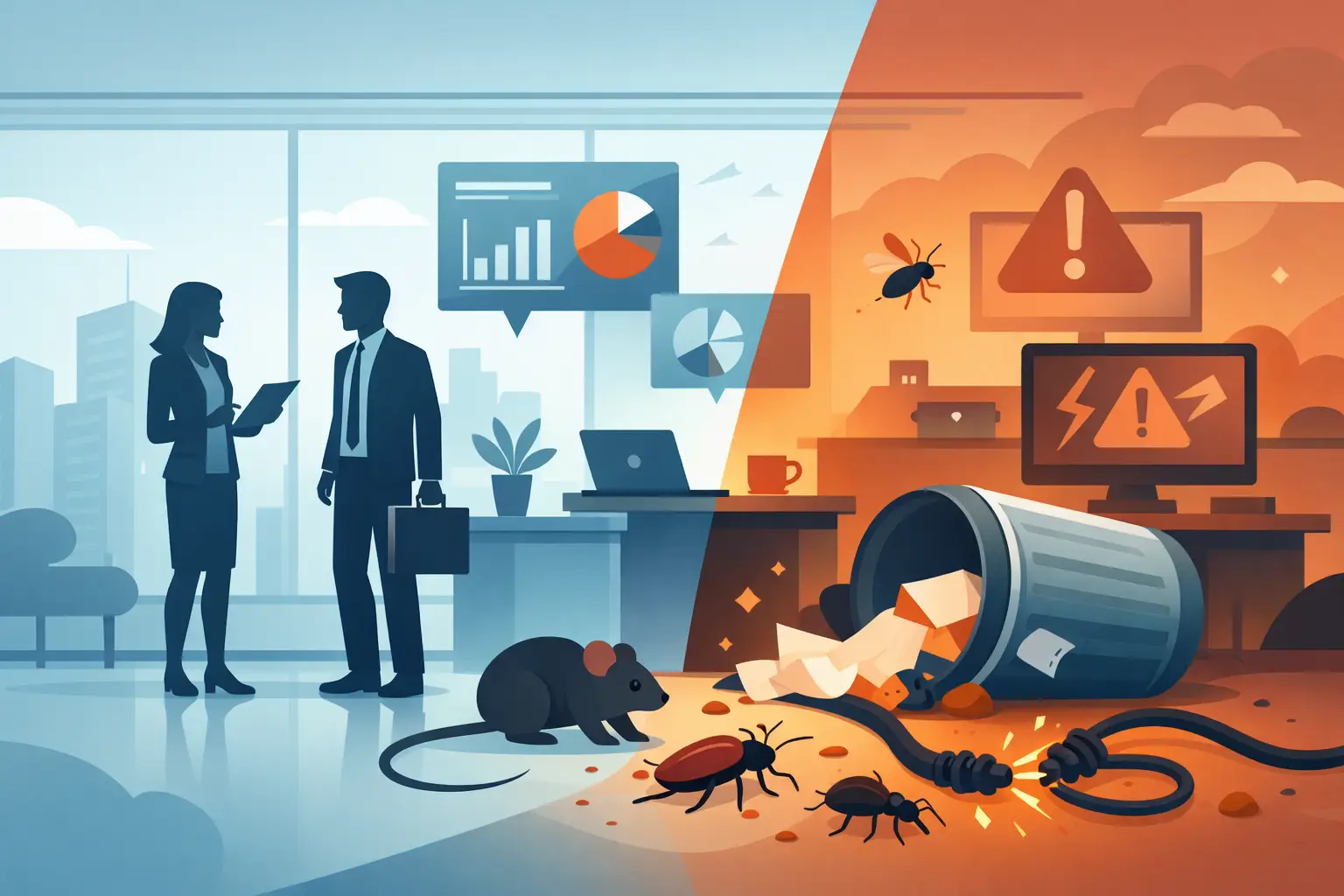
A mouse sighting near a break room, fruit flies around a café drain, or ants along a warehouse wall may look like a small maintenance issue. But can pests disrupt business operations? Absolutely. Left unresolved, pest activity can interrupt production, damage inventory, create sanitation concerns, unsettle employees and customers, and put a business's reputation at risk.
For property managers, restaurant owners, office managers, and industrial supervisors, the real cost is rarely limited to the pest itself. It is the time spent responding to complaints, moving products, cleaning affected areas, documenting incidents, and trying to keep the business open while the problem grows. Fast, professional pest management helps turn a disruptive situation into a controlled, practical repair.
How Pests Affect Day-to-Day Business Operations
Pests create problems in different ways depending on the property. A small office may face employee complaints and damage to stored supplies. A restaurant may face immediate food-safety concerns. A factory or warehouse can lose time when rodents damage packaging, contaminate materials, or chew electrical wiring.
The most serious disruptions often happen when the warning signs were present for weeks but were treated as isolated incidents. One cockroach in a kitchen can indicate a hidden population near water, warmth, and food. A few rodent droppings can signal active travel routes behind equipment, above ceilings, or inside wall voids. By the time the issue is visible during business hours, pests may already be established.
Lost time and interrupted workflow
Pest activity pulls staff away from their normal responsibilities. Managers may need to inspect stock, answer customer questions, coordinate emergency cleaning, or restrict access to a room. Maintenance teams may have to move equipment and seal openings with little notice.
In a commercial kitchen, a pest concern can delay prep work or force the disposal of exposed ingredients. In an office, bed bugs brought in on personal belongings can lead to anxiety, seat changes, and temporary closure of affected areas for inspection and treatment. In industrial settings, rodents can affect machinery, cable insulation, and stored materials, creating a larger maintenance issue than a simple trap can solve.
Inventory loss and property damage
Rodents, cockroaches, pantry pests, and birds can contaminate food, packaging, paper products, and other stored goods. Even when products are not directly damaged, businesses may need to discard items that were stored near droppings, urine, nesting materials, or insect activity.
Rodents deserve particular attention because they chew continuously. They may damage wires, insulation, wood, plastic, and soft materials used in storage or production. Termites and other wood-damaging insects can create slower, less visible structural concerns. Ants can also affect operations when they enter wall voids, electrical boxes, kitchens, staff areas, or customer-facing spaces.
The financial impact depends on the type of business and the extent of the infestation. A single damaged box may be manageable. Damage to an electrical system, large quantities of stored inventory, or a customer-facing area can become expensive quickly.
Health, sanitation, and compliance pressure
Businesses that handle food, serve the public, house tenants, or maintain regulated work environments have an added responsibility to keep their properties clean and sanitary. Pests can complicate inspections and create documentation concerns, especially if there is no clear record of corrective action.
A pest issue does not automatically mean a business has failed its health or safety obligations. Conditions matter, and inspectors consider the full picture. Still, visible pest activity, poor waste handling, food debris, standing water, and unsealed entry points can raise concerns that demand prompt action.
This is why pest control and sanitation should work together. Removing pests without correcting the conditions that support them can lead to repeat activity. Deep cleaning, regular janitorial service, drain care, garbage bin sanitation, and proper waste storage reduce the food, moisture, and shelter pests need.
Can Pests Disrupt Business Operations Beyond the Building?
Yes. A pest problem can affect customer confidence and employee morale long after treatment begins. Customers may remember seeing a fly near a counter or a rodent near a dumpster, even if the source was outside the main business area. Online reviews and word-of-mouth can make a small visible incident feel much larger.
Employees also need to feel safe and respected at work. Repeated reports of pests without a clear response can make staff believe their concerns are not being taken seriously. A prompt inspection and a straightforward explanation of the plan help restore confidence. People do not expect every property to be immune from pests. They do expect the responsible party to act when there is a problem.
For landlords and property managers, pests can create tension between tenants, maintenance teams, and ownership. Clear communication matters. Residents and commercial tenants need to know what preparation is required, when service will occur, what areas are being addressed, and what prevention steps will follow.
The Early Signs Worth Acting On
Pest problems are easier to manage when they are caught early. Staff should know how to report concerns without embarrassment or delay. A simple reporting process gives managers useful information before the issue spreads.
Watch for these signs:
- Droppings, gnaw marks, grease trails, nesting material, or unusual odors that may point to rodents.
- Live or dead cockroaches, shed skins, egg cases, or small dark spotting near kitchens, washrooms, and equipment.
- Ant trails, especially near sinks, break rooms, windows, or exterior doors.
- Flies, drain flies, or fruit flies appearing repeatedly near food areas, drains, garbage rooms, or mop sinks.
- Bites, blood spotting, or small insects around upholstered furniture, lockers, staff rooms, or lodging areas that may suggest bed bugs.
A report should include the location, date, time, and what was observed. Photos can help when it is safe to take them. That information allows a trained technician to inspect more efficiently and identify likely entry points, nesting areas, or sanitation issues.
What an Effective Response Looks Like
The right response is not always the strongest product or the quickest visible fix. It begins with an inspection. A trained pest professional looks for the pest species, the level of activity, access points, food and water sources, and conditions that could cause the problem to return.
Treatment should be matched to the property and its operations. A restaurant kitchen, child care setting, office, warehouse, and manufacturing floor each require different timing, materials, and safety considerations. The goal is to control the pest while protecting employees, customers, pets where applicable, food-handling areas, equipment, and normal operations.
For active infestations, a business may need targeted treatment, trapping, exclusion work, sanitation improvements, and follow-up visits. Some situations require service outside operating hours. Others can be handled with carefully planned work that keeps disruption low. The best approach depends on the pest, the size of the property, the severity of activity, and the business's operating schedule.
A good provider explains what is being done and why. They should also explain what the business needs to do between visits, such as storing food in sealed containers, reducing clutter, repairing leaks, managing waste, or keeping doors closed. Pest control works best as a shared effort between the service team and the people using the property every day.
Prevention Protects Uptime
Scheduled pest management is often less disruptive than waiting for an emergency. Regular service gives technicians a chance to monitor activity, refresh control measures where needed, inspect vulnerable areas, and spot changes before they become a visible problem.
Prevention is especially valuable for businesses with frequent deliveries, shared walls, food service, high customer traffic, loading docks, or large waste areas. These conditions do not mean a property is poorly managed. They simply create more opportunities for pests to enter and find what they need.
Practical prevention starts with clean food areas, sealed storage, prompt spill cleanup, functional door sweeps, repaired screens, managed vegetation near the building, and clean garbage and dumpster areas. Regular carpet, tile, and bin cleaning can also support a healthier facility by reducing odors, residue, and conditions that attract pests.
When a pest concern appears, acting early protects more than the building. It protects your staff's time, your customers' trust, and your ability to keep business moving. A prompt inspection and a clear prevention plan can keep a small sign from becoming the reason operations have to stop.