
Apartment Cockroach Control Case Study Results
This apartment cockroach control case study shows how inspection, targeted treatment, sanitation, and follow-up stopped a recurring building infestation.
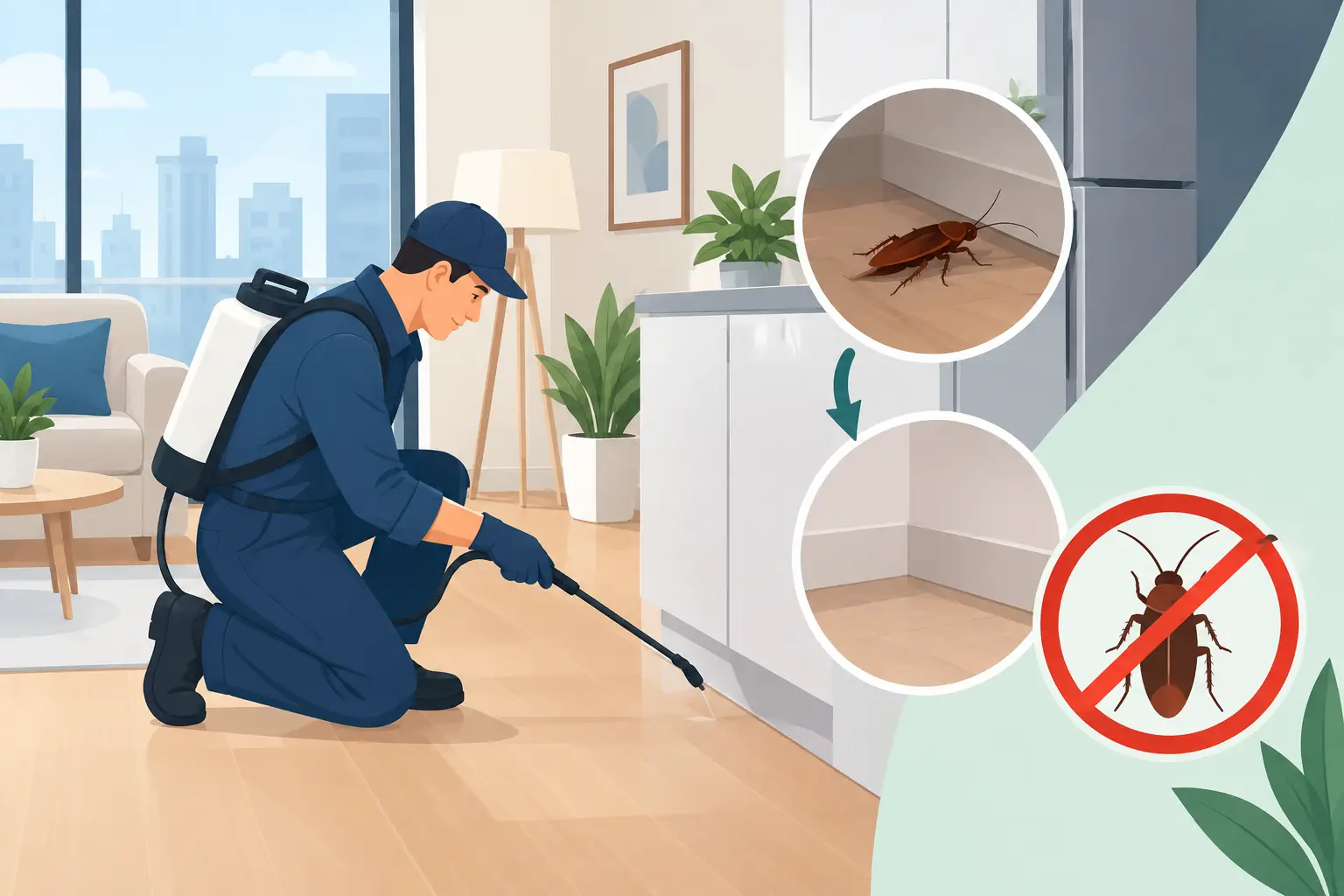
A cockroach complaint in one apartment can quickly become a building-wide hygiene concern. This apartment cockroach control case study follows a representative multi-unit property situation: recurring sightings, frustrated residents, and a landlord who needed clear answers and practical results without disrupting every tenant unnecessarily.
The property had received several reports over two months. Most sightings were in kitchens, but residents in nearby units had also seen small cockroaches around bathroom sinks and behind refrigerators. Store-bought sprays had reduced visible activity for a few days, yet the problem kept returning. That pattern mattered. It suggested the issue was not limited to a single unit or a single missed cleaning task.
The Property Problem: More Than One Roach Sighting
The building was a three-story apartment property with shared plumbing lines, closely spaced kitchens, garbage collection near the rear entrance, and a mix of long-term and newer tenants. The landlord initially believed the issue started in one unit after a resident moved out. Inspection findings showed a more complicated picture.
Cockroaches had access to food residue, moisture, warmth, and travel routes between units. Activity was heaviest in two kitchens, but evidence was also found in voids around plumbing penetrations and near appliance motors. Small droppings, shed skins, and egg cases indicated an established population rather than a recent, isolated introduction.
For property managers, this distinction changes the response. Treating only the unit where the first complaint came from can leave nearby harborages untouched. On the other hand, treating an entire building without an inspection can create unnecessary expense and inconvenience. The right scope depends on evidence.
Apartment Cockroach Control Case Study: The Inspection Plan
The first step was a room-by-room inspection of the reported units and the apartments sharing walls, plumbing, or utility access. Technicians checked behind refrigerators and stoves, under sinks, inside cabinet hinges, around pipe openings, near hot-water lines, and in other dark, sheltered areas where cockroaches commonly hide.
Monitoring devices were placed in selected locations to confirm traffic patterns and identify where activity was highest. This gave the landlord a better picture of what was happening between service visits. It also helped separate active areas from units where there had been a single possible sighting but no supporting evidence.
The inspection identified three contributing conditions:
- Food debris and grease buildup under and beside kitchen appliances in several units.
- Gaps around pipes beneath sinks and behind cabinets that allowed movement between spaces.
- Overflowing or poorly managed waste near the building's garbage area, which increased pressure around the property.
None of these conditions alone caused the infestation. Together, they made it easier for cockroaches to survive and spread. That is why effective apartment control requires more than applying a product and hoping for a quick result.
The Treatment Strategy: Targeted, Not Disruptive
The service plan focused first on the units with confirmed activity, then on connected units where inspection or monitoring showed risk. Residents received simple preparation instructions before treatment. They were asked to clear items from under sinks, clean accessible food spills, store food in sealed containers, and make kitchen and bathroom areas available for service.
Treatment used targeted applications in cracks, voids, cabinet areas, and other established harborages. Gel baits were placed where cockroaches would forage, while carefully selected treatment materials were applied to hidden areas rather than broadly across living spaces. The goal was to reach the population where it lived and fed while keeping the process mindful of residents, pets, and daily routines.
This approach was chosen for a reason. Heavy spraying can sometimes push cockroaches deeper into walls or into neighboring units if it is not part of a coordinated plan. It can also interfere with bait placement. In an occupied apartment building, precision is often more useful than treating every visible surface.
Technicians also recommended sealing gaps around plumbing and utility penetrations after the initial treatment period. Maintenance staff closed openings beneath sinks, repaired a loose baseboard in one kitchen, and addressed a small moisture issue near a dishwasher connection. These repairs removed travel routes and reduced the damp conditions cockroaches rely on.
Sanitation Was Part of the Control Plan
Residents are sometimes blamed when cockroaches appear, but that is rarely fair or productive. Cockroaches can enter on deliveries, used furniture, boxes, neighboring units, or through service areas. Still, sanitation affects how quickly a treatment succeeds and how likely activity is to return.
At this property, the landlord arranged for detailed cleaning in the most affected kitchens, with special attention to grease beneath appliances, cabinet corners, and hard-to-reach floor edges. The building also improved waste handling. Garbage bins were kept closed, the surrounding pad was cleaned more regularly, and collection overflow was addressed promptly.
These changes did not replace professional treatment. They supported it. Baits work best when cockroaches are not finding an easier, constant supply of crumbs, grease, and accessible garbage. Cleaner conditions also make new activity easier to spot before it becomes a larger issue.
Follow-Up Visits Confirmed What Was Working
Cockroach control is rarely a one-visit situation in a multi-unit property. Egg cases can hatch after the first service, and roaches may remain hidden until conditions change. Follow-up visits were scheduled to inspect monitored locations, refresh baits where needed, and confirm that activity was trending down.
After the first treatment, residents in the two highest-activity units reported seeing occasional cockroaches during the following week. That was not treated as a failure. In many cases, increased movement shortly after treatment can occur as cockroaches encounter bait or leave disturbed harborages. What mattered was the direction of activity over time.
By the second follow-up, monitoring showed a substantial reduction in the affected kitchens. No new evidence was found in several connected units that had been inspected as a precaution. One unit still showed low-level activity near a refrigerator motor, so the technician adjusted the placement and continued monitoring rather than declaring the problem finished too early.
By the final scheduled visit, the property had no recent resident complaints, monitoring devices showed no ongoing capture in the previously active areas, and maintenance repairs had been completed. The landlord moved the building onto a prevention-focused inspection schedule rather than waiting for another complaint to trigger action.
What This Case Shows Property Managers
The result was not caused by one product or one visit. It came from finding the active areas, treating the right locations, correcting the conditions that supported the infestation, and returning to verify the outcome. That combination is especially important in apartments, where cockroaches can move through wall voids, shared plumbing, and neighboring kitchens.
A fast response also protected tenant confidence. Residents received straightforward preparation guidance and a clear explanation of why follow-up was necessary. The landlord had documented inspection findings and service records, which made it easier to communicate with tenants and plan maintenance work.
For a single-family home, the treatment scope may be more contained. For a restaurant, staff practices, deliveries, storage rooms, and food-service regulations add another layer. In apartments, coordination is often the deciding factor. The best plan is one that fits the building, the level of activity, and the people living there.
Prevention After the Last Treatment
Once activity has stopped, prevention should remain practical. Building staff should respond quickly to leaks, keep garbage areas clean and closed, inspect vacant units before new move-ins, and watch for gaps around pipes and utilities. Residents can help by reporting sightings early, avoiding loose food storage, and checking boxes or secondhand items before bringing them inside.
North Peace Pest Control and Maintenance Corporation helps property managers turn those steps into a clear service plan, combining responsive cockroach treatment with sanitation and maintenance support when needed. The aim is not simply to make cockroaches less visible. It is to restore a clean, comfortable property and keep small warning signs from becoming a larger resident and operations problem.
A single cockroach sighting deserves attention, but it does not have to become a crisis. Early inspection, honest communication, and a coordinated response give apartment owners and managers the best chance to regain control before the problem spreads.